Call Us
AI TRACKING
● REC 00:14:32
- Mon - Fri 10:00 - 18:00, Sat 10:00 - 15:00, Sunday - CLOSED
- Email: sales@israintech.com

-
-


WhatsApp
+92 321 1114772
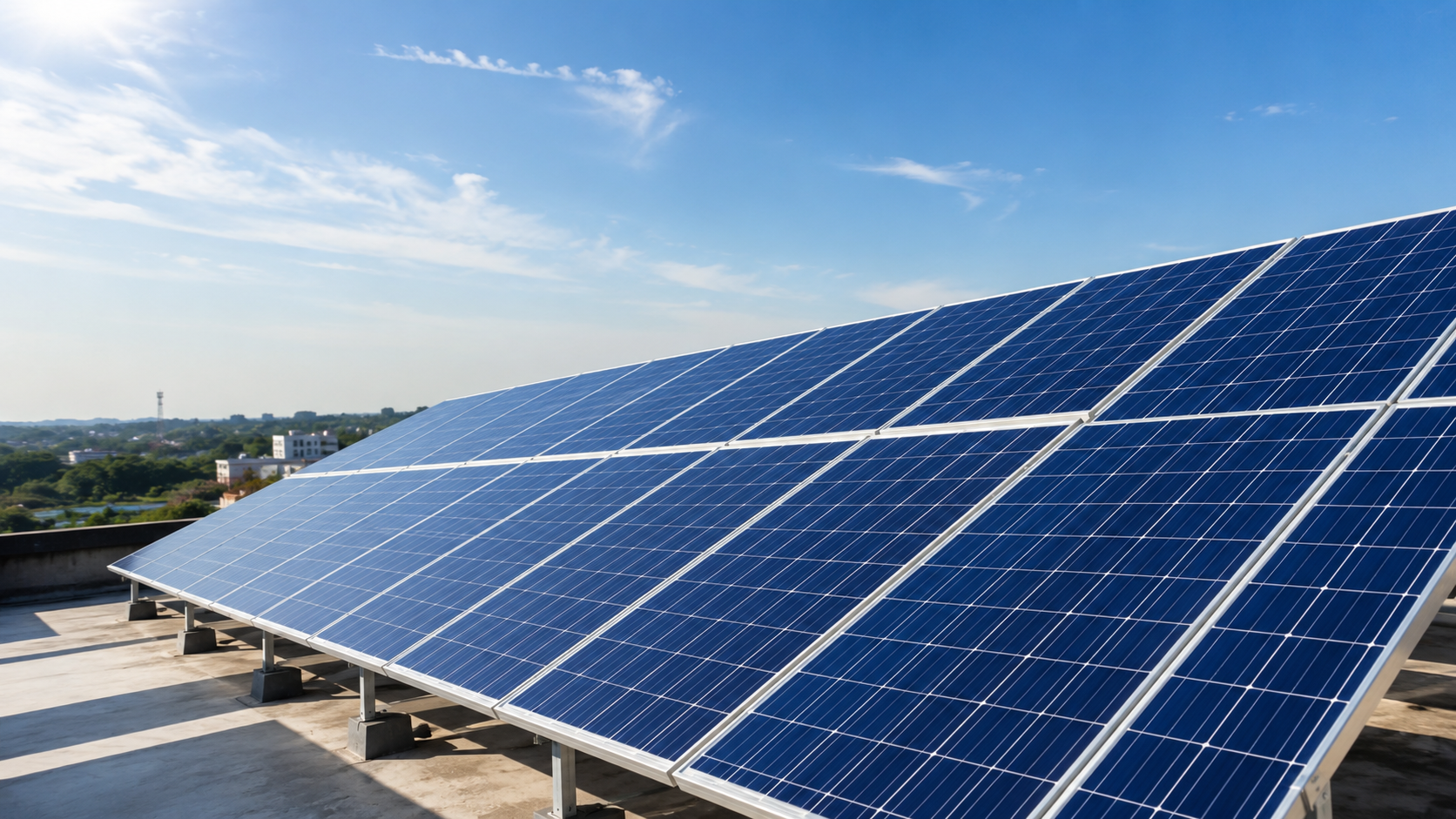
Walk into any solar market in Lahore, Karachi, or Islamabad, and you’ll hear a dozen different answers to the same question: which solar panel is best in Pakistan? Every shopkeeper swears by a different brand, every installer has a “special deal” on a name you’ve never heard of, and somewhere in the middle of all that noise is a decision that will affect your electricity bill for the next 25 years.
This guide cuts through the sales pitches. We’ll break down what actually makes one solar panel better than another, compare the brands genuinely worth considering in Pakistan right now, and show you how to avoid the counterfeit panels quietly circulating in this market.
What Actually Makes a Solar Panel “Best”?
Before comparing brand names, it helps to know what you’re even judging them on. Four factors decide whether a panel is worth your money:
- Efficiency: How much sunlight the panel converts into usable electricity. Higher efficiency means more power from the same roof space.
- Degradation rate: How much output the panel loses every year. A panel that loses 0.8% per year will generate noticeably less power by year 15 than one that loses 0.4% per year.
- Warranty: Both the product warranty (covers manufacturing defects) and the performance warranty (guarantees a minimum output percentage over 25 years).
- Build quality and Tier ranking: Whether the manufacturer is a proven, financially stable producer, or an unknown assembler cutting corners on materials.
Panels that score well across all four categories cost more upfront, but they pay that difference back through 20+ extra years of reliable, higher generation.
Understanding Solar Panel Technology: Mono, Poly, PERC, and TOPCon
Every panel spec sheet is full of acronyms. Here’s what they actually mean and why they matter for a rooftop in Pakistan’s climate:
| Technology | What It Means | Typical Efficiency | Best For |
| Polycrystalline | Older, cheaper cell type made from multiple silicon fragments | 15–17% | Ultra-tight budgets; rarely recommended in 2026 |
| Monocrystalline PERC | Single-crystal silicon with a reflective rear layer | 19–21% | Standard residential installs, good value |
| N-type TOPCon | Newer cell architecture with lower resistance and better heat tolerance | 22–23% | Most new installations in 2026 — the current standard |
| HJT (Heterojunction) | Hybrid cell combining crystalline and thin-film layers | 22–23.5% | Premium installs prioritizing peak efficiency |
The short version: TOPCon has replaced PERC as the mainstream choice for new installations in Pakistan. It performs better in high rooftop temperatures, which matters when your panels regularly sit above 50°C in summer, and degrades more slowly over its lifespan. Unless you’re working with an extremely tight budget, there’s little reason to buy older PERC panels in 2026.
What “Tier-1” Actually Means? (And Why Installers Keep Saying It?)
You’ll hear “Tier-1” thrown around constantly in solar sales conversations, and it’s worth understanding what it actually signifies. Tier-1 is a classification originally used by financial analysts to rank solar manufacturers by production scale, financial stability, and bankability.
In practice, though, Tier-1 manufacturers tend to run better-automated factories, use higher-grade raw materials, and stand behind their warranties because they’re financially large enough to honor them decades from now. A no-name “Tier-3” panel might look identical on a spec sheet, but there’s no guarantee the company issuing that 25-year warranty will still exist in 10 years.
Top Solar Panel Brands Available in Pakistan (2026)
Here’s how the most commonly available brands in the Pakistani market compare on paper:
| Brand | Technology | Peak Efficiency | Product Warranty | Performance Warranty | Market Position in Pakistan |
| Jinko Solar (Tiger Neo) | N-type TOPCon | ~22.8% | 12 years | 30 years | Widest distribution; safe, proven choice |
| LONGi (Hi-MO series) | HPBC / N-type TOPCon | ~22.5–23% | 12 years | 25 years | Strong installer reputation, widely stocked |
| JA Solar (DeepBlue) | N-type TOPCon | ~22.4% | 12 years | 25 years | Best value-for-money among Tier-1 options |
| Canadian Solar | N-type TOPCon / HJT | ~22.5–23% | 12 years | 25 years | Strong brand recognition, slightly premium pricing |
| Trina Solar (Vertex) | N-type TOPCon | ~22.5% | 15 years | 25 years | Longest product warranty in this group, larger panel format |
| Astronergy | N-type TOPCon | ~22% | 12 years | 25–30 years | Growing presence, competitive pricing |
Note: Efficiency figures represent manufacturer-published peak ratings under lab conditions; real-world output varies with installation angle, temperature, and shading.
All six brands above are genuine Tier-1 manufacturers with a real track record — the decision between them usually comes down to price availability in your city, warranty length preference, and which brand your chosen installer already stocks and services.
How to Choose Between Them?
Here’s a simpler way to translate the table above into an actual decision:
- Safest, most serviceable option? Jinko or LONGi — the two names installers across Pakistan are best equipped to support.
- Tight budget, but no compromise on Tier-1 quality? JA Solar offers the best efficiency-per-rupee in this group.
- Longest warranty on paper? Trina Solar’s 15-year product warranty leads the pack.
- Resale value matters? Canadian Solar carries the strongest global brand recognition.
None of these are “wrong” choices — at the Tier-1 TOPCon level, the performance gap between brands is small. The bigger risk isn’t picking the “wrong” Tier-1 brand; it’s ending up with a counterfeit or downgraded panel sold under a trusted name.
The Counterfeit Problem: How to Protect Yourself?
Pakistan’s solar boom has attracted a real counterfeiting problem. Refurbished panels get repackaged as new. Grade-B cells with visible defects get sold as Grade-A. Labels get printed for brands the panels were never actually manufactured by. Here’s how to protect yourself before you commit:
- Verify the serial number. Every legitimate Tier-1 manufacturer runs an online verification portal. Enter the panel’s serial number on the manufacturer’s official website before installation — if it doesn’t return valid data, walk away.
- Scan the QR code yourself. It should link directly to the manufacturer’s official database, not a generic landing page.
- Inspect the frame and backsheet. Genuine panels have a clean, consistent anodized aluminum frame with no visible scratches, gaps, or corrosion. The backsheet should be smooth, with no bubbling or peeling.
- Ask for the factory flash test report. Every panel is individually tested before it leaves the factory. This report shows its actual measured output. A legitimate supplier will have it on hand.
- Buy only from authorized distributors. Check the manufacturer’s official website for its listed distribution partners in Pakistan, and confirm your installer or supplier is on that list.
Solar Panel Price Ranges in Pakistan (Approximate)
Pricing shifts often with import duties, currency movement, and global silicon prices, so treat this as a general starting point rather than a fixed quote:
| Panel Wattage | Approximate Price Range (Tier-1 TOPCon) |
| 450W – 480W | PKR 18,000 – 24,000 |
| 545W – 550W | PKR 22,000 – 27,000 |
| 580W – 590W | PKR 25,000 – 30,000 |
Always get a written, itemized quote before committing — one that separately lists panel brand, wattage, wiring, mounting structure, and inverter, rather than a single bundled number. This is the easiest way to spot whether you’re actually being sold Tier-1 hardware or a cheaper substitute.
Does the “Best” Panel Change Based on Your Roof?
Yes, and this is where generic advice often falls short:
- Limited roof space: Prioritize higher-wattage panels (580W+) for more power per square foot, even at a slightly higher per-panel cost.
- Budget-constrained homes: A reputable mid-efficiency Tier-1 panel (JA Solar, Astronergy) delivers strong long-term value without paying for marginal efficiency gains.
- Commercial or industrial roofs: Larger installations can absorb slightly lower per-panel efficiency for lower total system cost, since space usually isn’t the constraint.
- Hot, coastal regions (Karachi, Sindh): Prioritize panels with strong salt-fog and heat-tolerance certifications, since humidity and heat accelerate degradation on lower-quality panels.
Get Panels Matched to Your Roof, Not a Generic List
Every brand on this list is a legitimate, capable Tier-1 manufacturer. But the right one for your home depends on variables no blog post can see — your roof orientation, shading pattern, budget, and how long you plan to stay in the property.
Israintech sources only verified Tier-1 panels, checked serial-by-serial before installation, and matched to your specific roof and budget rather than whichever brand offers the highest margin. If you want a solar system built on panels you can actually trust for the next 25 years, get in touch with our team for a free consultation and site survey.
Frequently Asked Questions
Which solar panel brand is best in Pakistan overall?
Jinko Solar and LONG are generally considered the safest, most widely available Tier-1 choices in Pakistan, thanks to strong distribution and installer familiarity. JA Solar is the top pick for buyers prioritizing value.
Is monocrystalline or polycrystalline better for Pakistan?
Monocrystalline panels, especially N-type TOPCon variants, are strongly preferred in 2026. They perform better in high rooftop temperatures and offer noticeably higher efficiency than older polycrystalline panels.
What is the difference between Tier-1 and Tier-2 solar panels?
Tier-1 refers to large, financially stable manufacturers with proven production scale and bankable warranties. Tier-2 and Tier-3 manufacturers may offer similar specs on paper but carry higher risk of inconsistent quality and unreliable warranty support
How long do good solar panels last in Pakistan?
Tier-1 panels typically carry a 25 to 30-year performance warranty and can continue generating meaningful power well beyond that, though annual output gradually declines due to natural degradation.
How can I tell if a solar panel is fake or refurbished?
Verify the serial number on the manufacturer’s official website, inspect the frame and backsheet for inconsistencies, and request the factory flash test report before purchase. Buying only from authorized distributors is the most reliable safeguard.

Leave A Comment